

Research on the Development of Human Resource Management in Iceland in an International Context
Data collection for CRANET in Iceland has now begun. This is part of a long-term, comparative research project in the field of human resource management, involving a total of 50 participating countries. The next round of data collection will take place across all countries in spring 2026.
Since 1989, a group of scholars from business schools around the world has collaborated on long-term comparative research in human resource management under the auspices of the Cranfield Network on International Human Resource Management (CRANET). In total, 50 countries participate in the project.
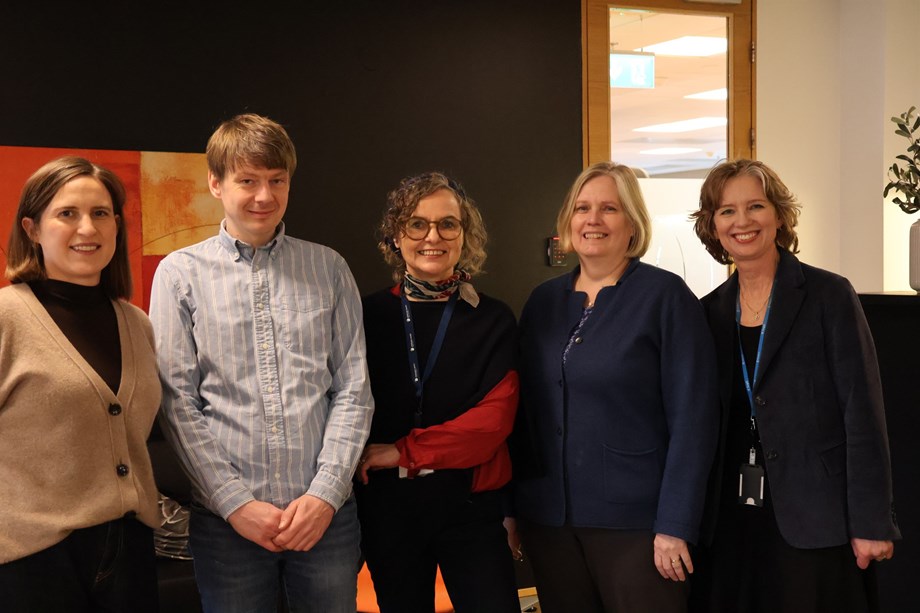
In Iceland, the project is led by Arney Einarsdóttir, Professor at the Department of Business Administration at Bifröst University, who also serves on the project’s international advisory board. Katrín Ólafsdóttir, Associate Professor at the Department of Business and Economics at Reykjavík University, and Ásta Bjarnadóttir, Head of Office for Professional Development and Work Environment at the City of Reykjavík, have also long been members of the Icelandic steering group. On this occasion, Arndís Vilhjálmsdóttir and Hans Haraldsson, specialists in survey research at Spectis, are contributing to the project, assisting with data collection and analysis.
Data collection has been conducted in Iceland every three to five years since 2003. During this time, numerous reports and academic articles have been published, based on both national and international data. The next round of data collection is scheduled for spring 2026 across the 50 participating countries and will begin in Iceland in March.
This year, the project in Iceland is supported by Mannauður – The Icelandic Human Resource Management Association, the Government Human Resource and Pay Office, and the Occupational Safety and Health Fund of the Administration of Occupational Safety and Health.
Objectives and Methodology
The aim of the study is to analyse how human resource management is practised in Icelandic companies and public organisations, and to compare this with practices in other countries. This provides a clear picture of the development of human resource management in Iceland within an international context. The study also compares different industries and analyses results by organisational size.
The research covers a wide range of HRM practices, including:
-
Staffing and recruitment
-
Training and development
-
Performance appraisal
-
Compensation and benefits
-
Internal communication
-
Downsizing measures
-
Relations with trade unions
-
Organisation and division of HR responsibilities
-
Human Resource Maturity
Benefits for Participants
Participating companies and organisations receive detailed feedback on their own practices, as well as benchmarking against national and international results. Evidence suggests that participants use the findings to set clear goals for the development of their HR practices.
Over the years, the project has resulted in well-attended presentations, published reports, and the dissemination of findings at international conferences, meetings and seminars. The results are also used in teaching at Bifröst University, the University of Iceland, Reykjavík University and elsewhere, as well as in master’s and doctoral research projects and academic studies.
Both the Icelandic data and the international database therefore provide an important foundation for continued knowledge development in the field of human resource management.
Examples of publications by researchers involved in CRANET can be found here.
The international report from the most recent data collection (2021–2022) is also available via SSRN (Social Science Research Network).