

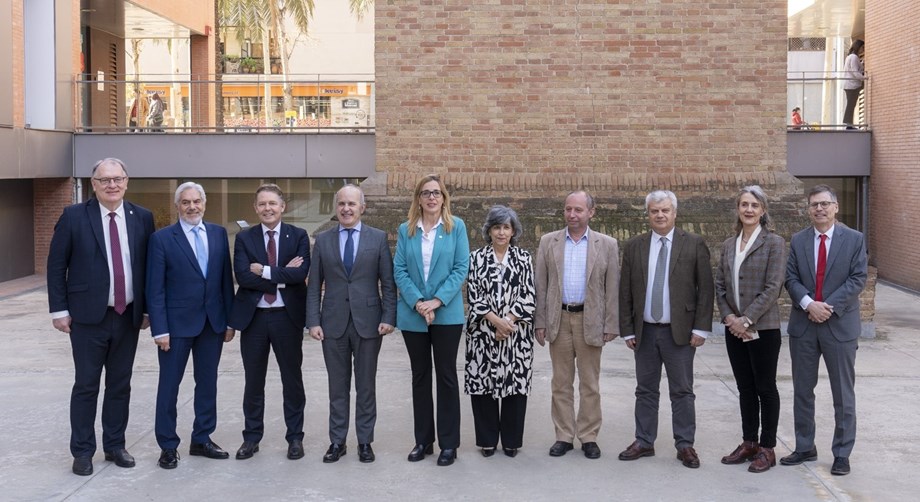
The rectors of the ten universities participating in the OpenEU university network
January 15. 2025The OpenEU University Network Lays the Foundation for a Pan-European Distance-Learning University
The inaugural meeting of the OpenEU university network will take place on 16–17 January in Barcelona, where the rectors of the ten universities directly involved in the collaboration will gather. The network consists of eight of Europe’s leading open and distance-learning universities — including Bifröst University — as well as two traditional universities in Eastern Europe and a range of other institutions and organisations. Supported by the European Union, OpenEU aims to strengthen the development of higher education in Europe by promoting participation, equality, distance learning and lifelong learning.
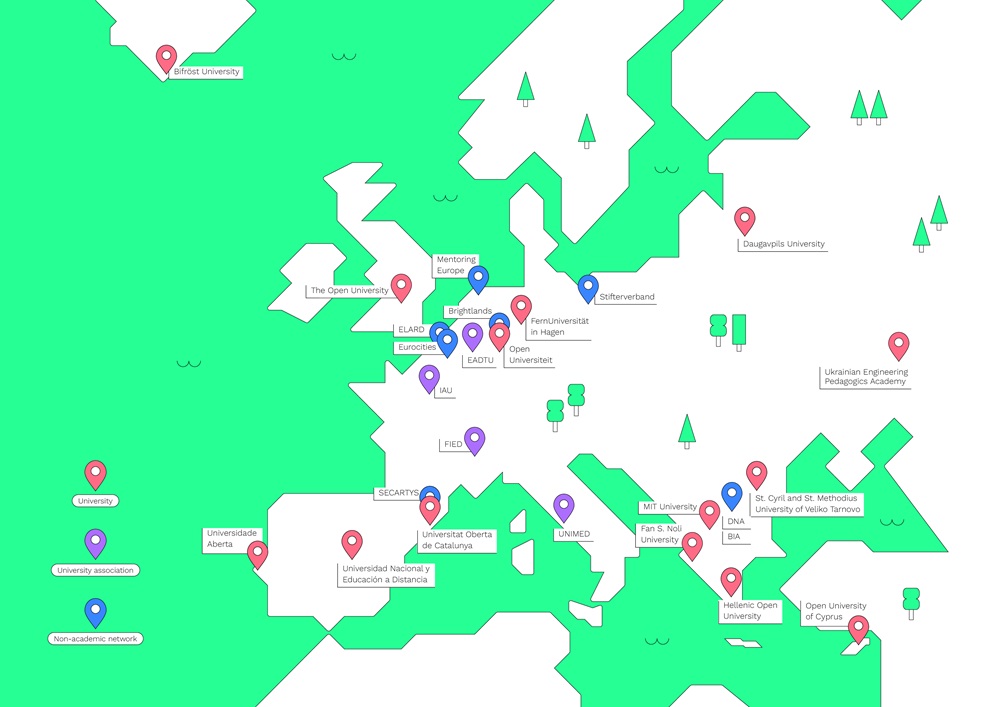
Establishing the OpenEU Network
With the establishment of the OpenEU university network, the foundations have been laid for the first truly pan-European open university. The network comprises 368,000 students and 24,000 teachers, academics and staff across Europe’s major open and distance-learning universities. All will benefit from a collaboration that prioritises lifelong learning, flexibility, equality and employability.
“In a time when privately run, profit-driven distance-learning institutions are appearing everywhere, OpenEU offers an opportunity to champion high-quality digital education as a cornerstone of the European Higher Education Area,” said Àngels Fitó, Rector of the Universitat Oberta de Catalunya and President of the OpenEU partnership. “As open and distance-learning universities in Europe, we have a responsibility to continue providing learning opportunities for individuals who, for various reasons, are unable to pursue campus-based study.”
“The unique value of the OpenEU network lies in bringing together Europe’s leading distance-learning universities in close cooperation with both local and international stakeholders,” said Kasper Kristensen, Head of the Rector’s Office at Bifröst University. “Participation in OpenEU represents an entirely new level of internationalisation for distance education in Iceland, ensuring that the country benefits from all major developments in digital learning.”
Goals and Key Challenges
The partnership will offer students international experiences through digital, blended and on-site mobility opportunities at partner universities. Students, teachers, researchers and administrators within OpenEU will gain expanded opportunities to work across institutions, strengthening collaboration, sharing best practice and addressing common challenges.
The collaboration will focus on three key areas that reflect global as well as European challenges: climate action, digital transformation, and democracy. Study programmes developed within OpenEU will centre on one or more of these themes.
One of the project’s aims is to offer diverse learning pathways. An international BSc in software development, an open master’s programme in climate change, and a suite of micro-credentials in the key thematic areas will be introduced to provide flexible study options and enhance international mobility and cooperation.
Doctoral studies will be a key component, encouraging collaboration among research teams across the network. Joint doctoral programmes may be established to create a vibrant and cooperative community of doctoral researchers.
Strengthening Employability
OpenEU places particular emphasis on enhancing student employability through shared internship and employment networks, supported by digital tools based on labour-market data. The network will work closely with organisations such as Eurocities and Stifterverband to offer work placements aligned with the needs of the European job market.
Supporting Digital Development in Higher Education
One of OpenEU’s core objectives is to use the knowledge and experience within the network to advance digital education across Europe’s higher education sector. To achieve this, OpenEU will collaborate with universities outside the network to help them develop their own digital solutions. The network will also promote joint research into digital pedagogy by establishing a European research cluster focused on technology-enhanced learning.
Equality in Access to Higher Education
OpenEU aims to improve access to higher education for underrepresented groups, including people with disabilities, women in STEAM fields, and residents of rural areas. The initiative will also enhance opportunities for immigrants and refugees through collaboration with the Mediterranean Universities Union (UNIMED).
Together with the European LEADER Association for Rural Development (ELARD), OpenEU will develop a shared rural strategy designed to improve access to higher education regardless of place of residence.
OpenEU will also launch a Europe-wide mentoring programme in partnership with Mentoring Europe. The programme, already active at the Universitat Oberta de Catalunya, will be expanded across Europe through OpenEU. Dedicated research and innovation projects in digital education will support the network’s long-term goal of transforming higher education through a shared digital vision.
OpenEU Partners
A total of 14 universities participate in the project, 10 of which are direct members of OpenEU from nine countries. These include:
-
Universitat Oberta de Catalunya and Universidad Nacional de Educación a Distancia (UNED) in Spain
-
Open Universiteit Nederland in the Netherlands
-
FernUniversität in Hagen in Germany
-
Open University of Cyprus
-
Hellenic Open University in Greece
-
Bifröst University in Iceland
-
St Cyril and St Methodius University of Veliko Tarnovo in Bulgaria
-
Universidade Aberta in Portugal
-
Daugavpils University in Latvia
Associated partner universities include the Open University (UK), Fan S. Noli University (Albania), MIT University (North Macedonia), and the Ukrainian Engineering Pedagogics Academy. Additional partners include organisations such as the European Association of Distance Teaching Universities (EADTU) and the International Association of Universities (IAU).